The General Data Protection Regulation (GDPR) is the most far-reaching privacy law in effect today. Though it is an EU regulation, its impact is global. Any organization that markets to, collects leads from, or processes data belonging to residents of the European Union must comply with GDPR—regardless of where the organization is located.
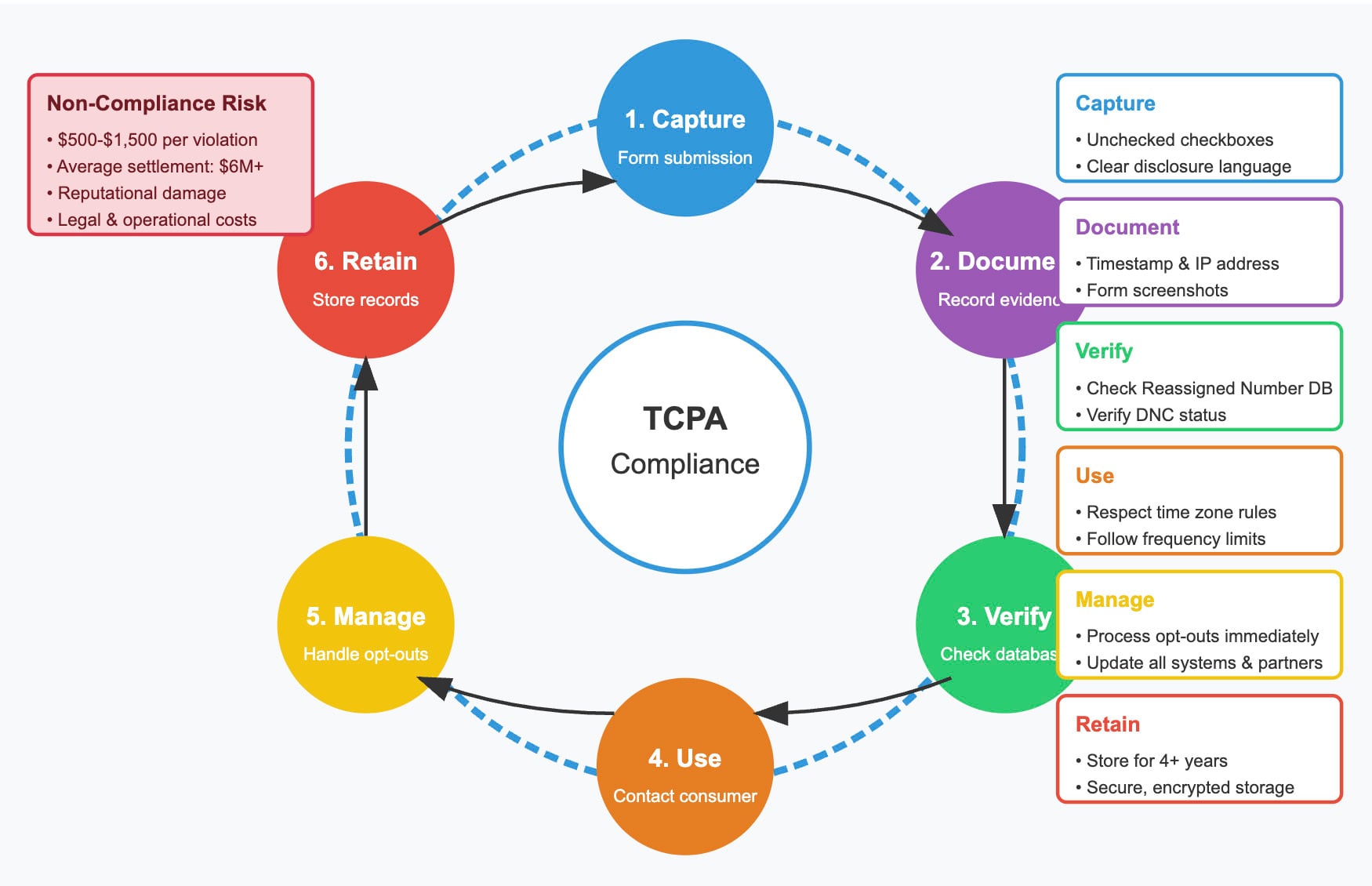
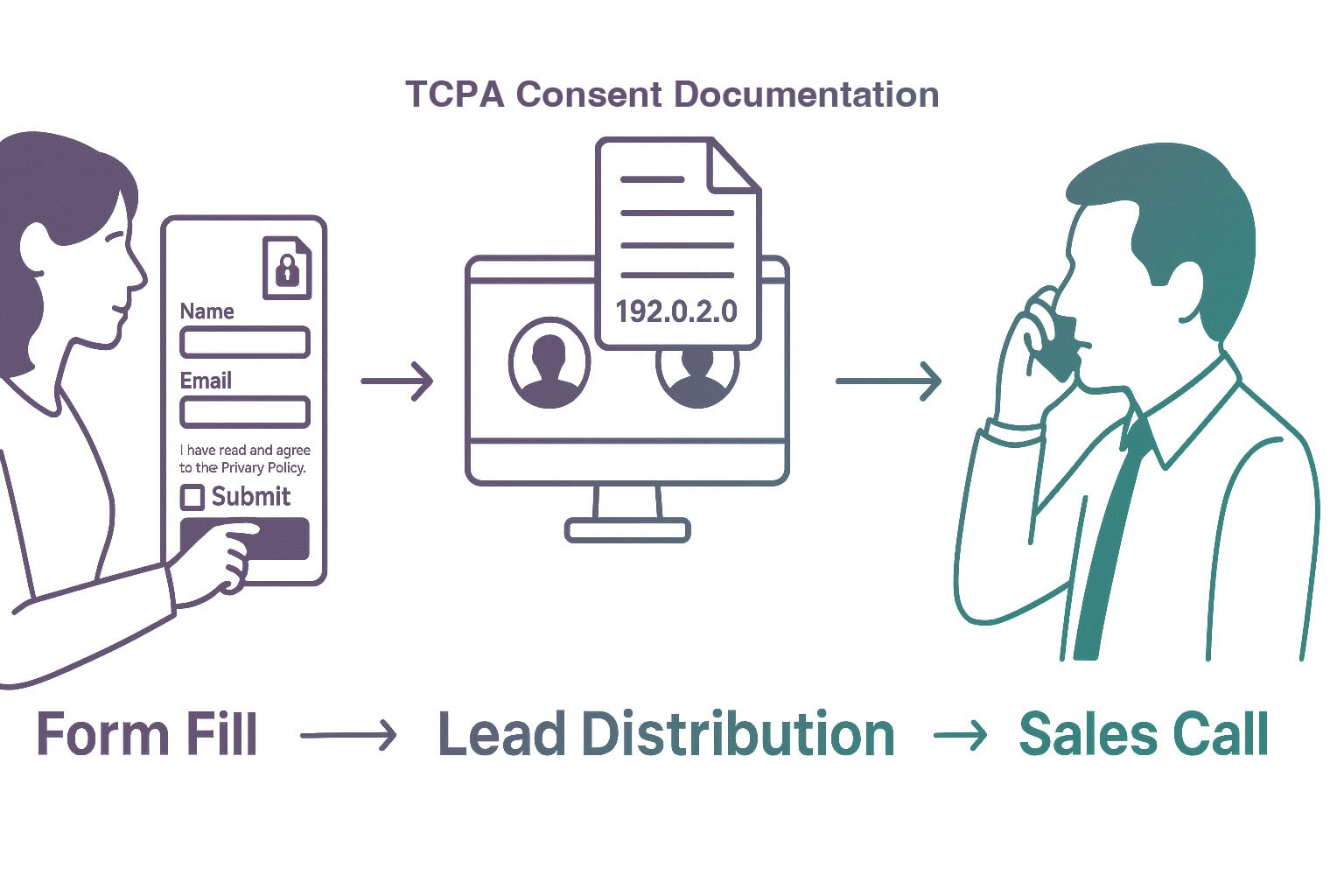
The Telephone Consumer Protection Act (TCPA) doesn’t just regulate how leads are contacted, it governs how they are captured, stored, distributed, and managed. For businesses that rely on lead generation, automated outreach, or third-party distribution, a misstep in any part of that process can lead to significant legal and financial exposure.
The Telephone Consumer Protection Act (TCPA) is one of the most litigated consumer protection laws in the United States. If your business buys, sells, or distributes leads, certifying the compliance of every lead source is a legal necessity.
Lead generation forms that comply with the Telephone Consumer Protection Act (TCPA) are essential if leads will be contacted via phone or text. The TCPA is a law governing how businesses may contact consumers. Compliance is essential for protecting your business from lawsuits and ensuring customer trust.
The California Consumer Privacy Act (CCPA) and its amendment, the California Privacy Rights Act (CPRA), are among the most comprehensive privacy laws in the United States. While focused on California residents, these laws have national reach and are often seen as a blueprint for other state privacy
Introduction Modern lead generation is governed by a growing framework of consumer protection laws. These laws regulate personal data capture, how and when contacts are made, and marketers' obligations when transferring or selling leads.
"Lead management software" can mean something different depending on who's using it. That affects which platform is best for which use case. Here's the breakdown.
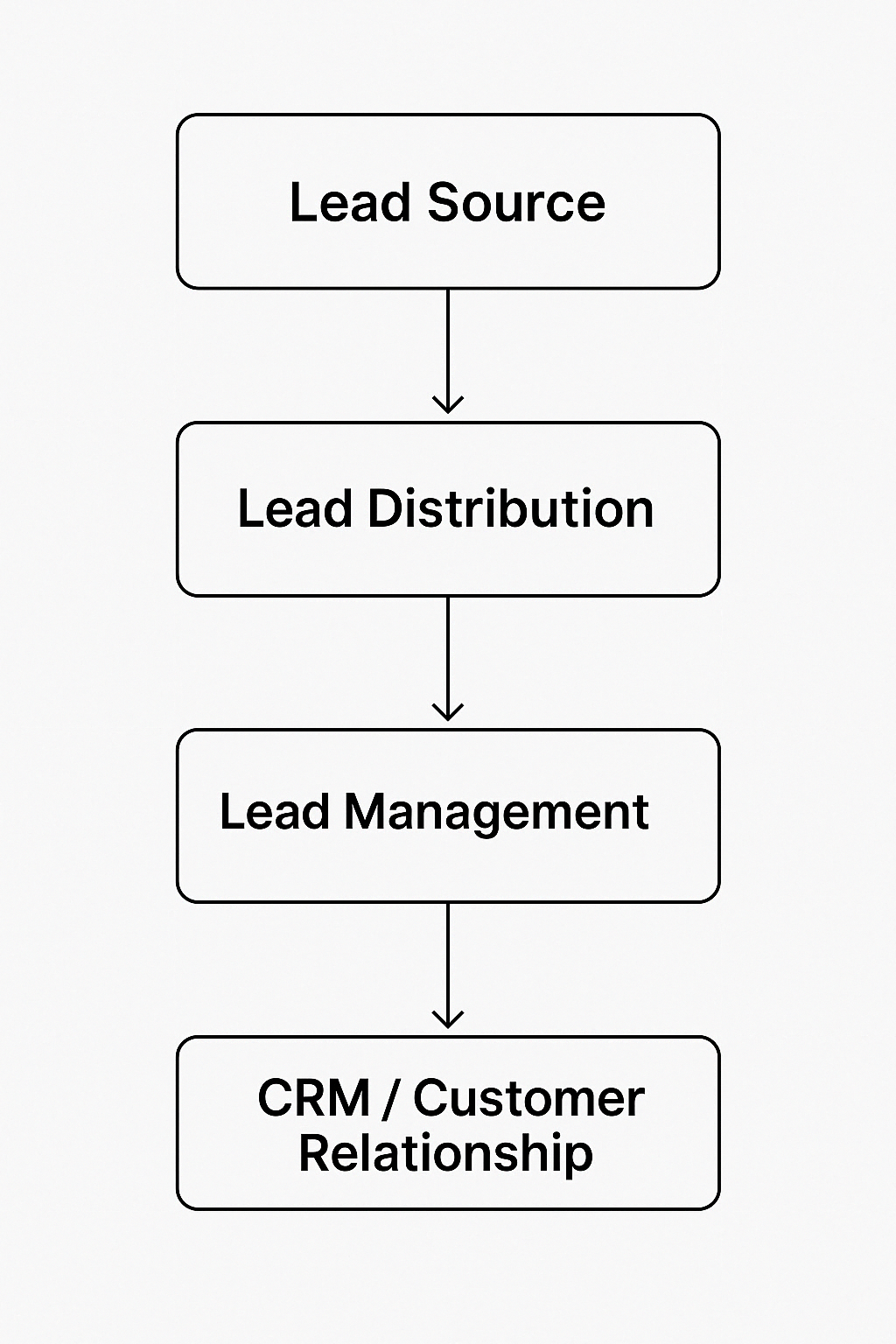
TL;DR: Lead distribution, lead management, and Customer Relationship Management (CRM) are three distinct software categories that solve different problems. Distribution operates on the routing decision. Lead management operates on the contact attempt. CRMs operate on the account. The categories function differently, and the architecture that connects them varies by what an organization does.
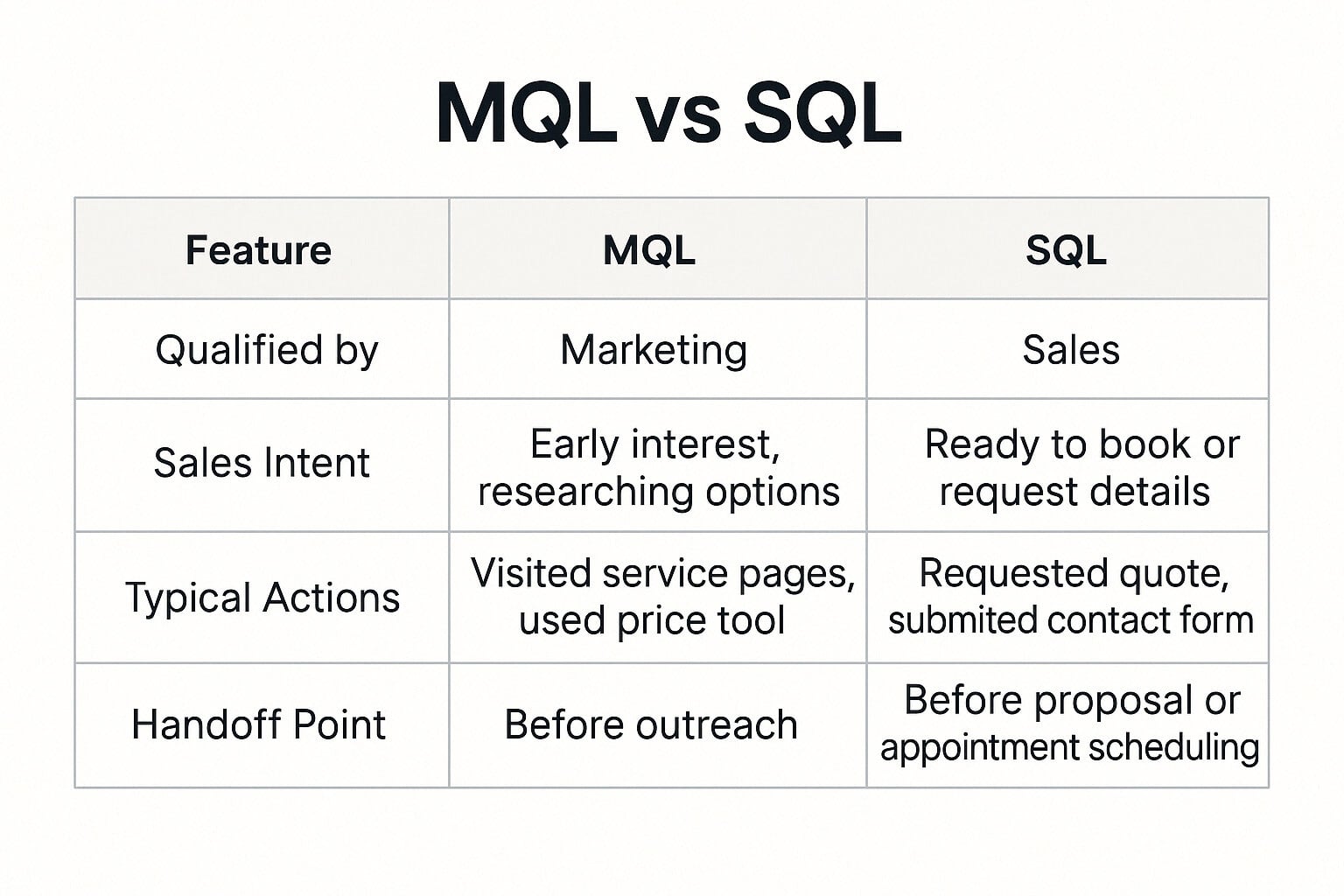
In lead-heavy industries like roofing, insurance, or legal, not every lead is ready to book. Calling every contact is a waste of time and money. That’s where Marketing Qualified Leads (MQLs) come in—they help you focus on the people most likely to convert. A Marketing Qualified Lead (MQL) is a lead that has engaged with your marketing but is not yet ready to speak with sales. MQLs meet specific behavioral or demographic criteria that suggest buying intent. Identifying and managing Marketing Qualified Leads helps companies focus their sales efforts on higher-quality prospects.
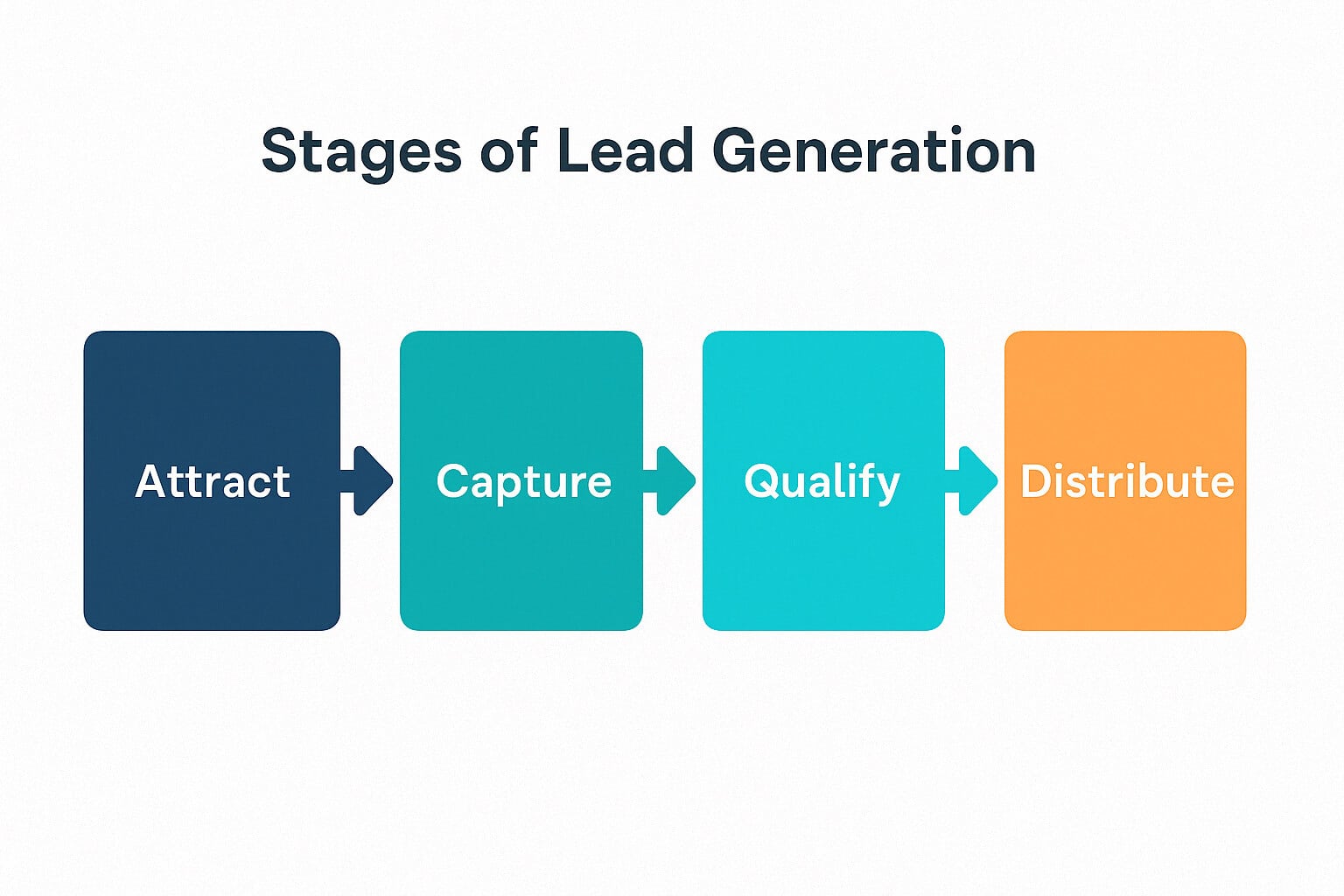
Lead generation is how businesses attract people who may want to buy a product or service. These people—called leads—share their contact information or reach out directly, showing interest in what the business offers.
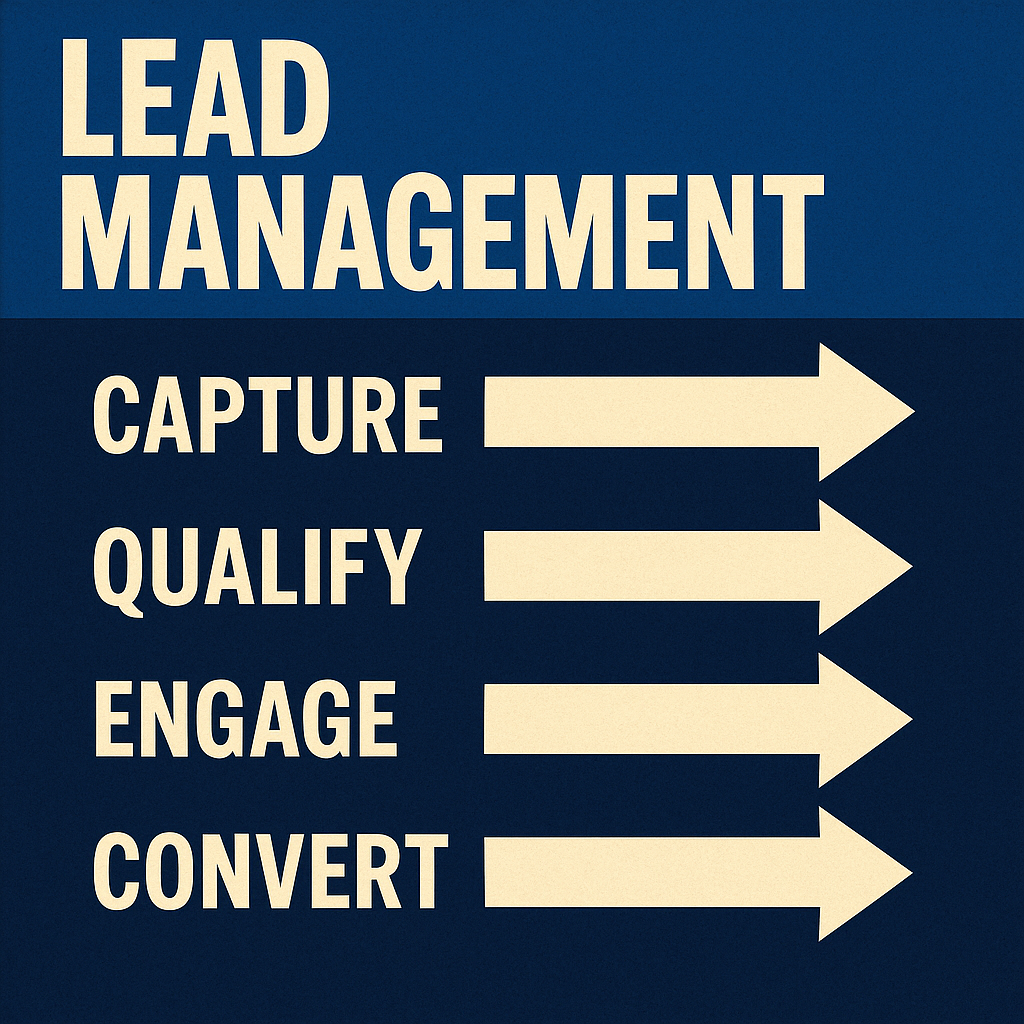
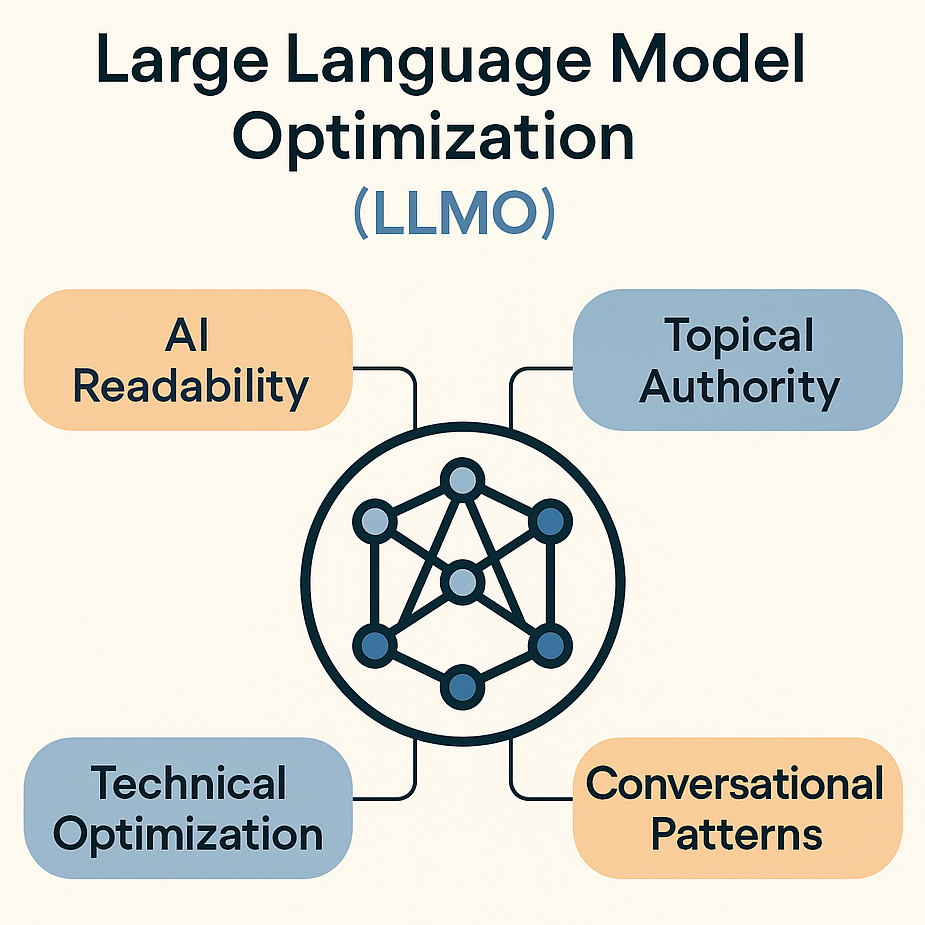
TL;DR: What Is LLMO? LLMO (Large Language Model Optimization) means writing and structuring content so it can be accurately understood, extracted, and reused by AI systems such as Google’s AI Overview, ChatGPT, Gemini, and Claude. Unlike SEO, which focuses on rankings, LLMO focuses on meaning and structure, ensuring ideas are clear enough for both people and language models to interpret correctly. The Search Shift of 2025 In early 2025, AI-powered search interfaces began dominating content discovery. Systems like Google AI Overview no longer point users to a list of links, they provide composite answers pulled from multiple content sources. This shift broke the link between ranking and visibility. Large language models now extract text from any indexed page, so authority depends less on domain strength and more on clarity, precision, and structure. Content that’s concise, readable, and logically organized is more likely to be quoted or summarized by AI. Keyword padding and formulaic SEO structures no longer work. Writing that teaches clearly and reads naturally, now wins both the human and machine audience. In 2026, we've seen AI models and AI search evolve dramatically, and marketers who have embraced LLMO principles have thrived. How LLMO Differs from SEO Traditional SEO LLMO (Large Language Model Optimization) Focuses on keyword usage & ranking Focuses on comprehension & extractability Optimizes for human readers & crawlers Optimizes for AI systems and language models Relies on backlinks and domain authority Relies on semantic structure and precision Prioritizes page-level optimization Prioritizes snippet- and fragment-level reuse Measures clicks and CTR Measures citations and context accuracy LLMO doesn’t exactly replace SEO, it builds on it to ensure content is visible across new, AI-first interfaces. Core Elements of LLMO 1. AI Readability and Sentence Structure Large language models process tokens and patterns, not just words. We can think of AI as a new kind of computing rather than computer "intelligence." Where traditional computers calculate with numbers, language models calculate with words. They do this by mapping relationships between tokens, the smallest units of language such as fragments of words, symbols, or punctuation. In that sense, a sentence becomes an equation, and clarity becomes the key to accuracy. To understand how this process works in practice, how words and concepts are converted into measurable relationships, see my article on vector embeddings. Writing for LLMO means expressing ideas clearly and directly while covering them fully. Information that’s easy to understand performs better for both humans and machines, but shallow explanations create gaps in meaning. The goal is completeness without clutter: concise sentences, logical flow, and connected ideas that demonstrate understanding. Semantic depth comes from showing relationships between concepts. When related ideas are explained precisely and in context, models recognize authority the same way readers do, through coherence, not complexity. The best writing feels natural to read and effortless to extract, built on clarity that reflects genuine comprehension. 2. Topical Authority and Semantic Coverage Authority is no longer measured by keyword density or backlinks, but by how completely and clearly a topic is explained. Search systems and language models recognize expertise through the accuracy, depth, and consistency of your content. When concepts are clearly defined and their relationships fully developed, content becomes easier to understand and more credible. Semantic coverage describes how fully a topic is explored through its connected ideas. Depth comes from explaining concepts in relation to one another, not in isolation. A piece about dogs, for example, reads as more complete when it also mentions leashes, bones, and barking at the mailman. These connections help both readers and language models understand the topic more completely. Comprehensive coverage gives both readers and machines clear signals of expertise. It demonstrates that you understand not just the topic itself, but the relationships that give it meaning. That balance between focus and connectedness is what separates true topical authority from simple keyword optimization. Once ideas are connected through context, structure determines how they’re understood and reused. 3. Technical Structure and Schema Machine-readable structure allows AI systems to interpret and reuse content accurately. Structure shapes how information is understood, extracted, and connected across the web. The goal is to organize meaning so that both people and language models can follow it easily. When structure is clear, comprehension improves on every level. Schema markup adds another layer of clarity. It translates a page from human language into a structured format that computers can understand. Think of it as cliff notes for a search engine: a quick summary that explains what each section of a page represents so the system doesn’t have to guess. Markup types such as FAQPage, HowTo, or Article signal intent, helping AI systems understand whether content answers a question, describes a process, or defines a concept. Metadata and structured elements like tables or lists reinforce that same clarity for both people and machines. To learn more about how schema markup works in practice, see my article on schema markup and structured data. Multimodal Impact: How Visuals Improve Visibility Images make complex ideas easy to understand at a glance. They reduce the effort it takes to interpret information and help both readers and AI systems recognize meaning more quickly. A clear, well-labeled visual can stand on its own. When an image illustrates an idea precisely and is paired with a descriptive caption and alt text, AI systems can recognize what it represents and display it directly in summaries or featured results. A strong visual can reach position zero for the same reason a well-written paragraph can, it communicates meaning completely and clearly. For example, I created an original, explanatory graphic for lead management that outperformed written content from much larger competitors. For years, that search term had been dominated by enterprise platforms and industry leaders well beyond my reach. The image succeeded because it explained the concept completely and without excess, showing the process from capture to conversion in one view. Because it conveyed the idea more clearly than the surrounding content, Google featured it at the top of results for that query. Similarly, the hero image from this article ranked above all of the major SEO companies (and was cited in the AI overview): Clarity can overcome scale. When a visual communicates an idea with precision, search systems identify it as the best available explanation. A single, well-structured image can achieve visibility that once depended on brand authority or backlink volume. Should You Replace SEO With LLMO? No, you should integrate them. LLMO is an evolution of SEO concepts aimed at improving relevant visibility. SEO helps your content get discovered. LLMO helps it get understood and reused. Together, they future-proof your content strategy. Where SEO, AI, and Human Needs ConvergeLLMO sits at the center of modern content strategy. It ensures that content is discoverable by search engines, understandable by AI systems, and valuable to human readers. This overlap isn’t accidental, it’s the result of deliberate optimization across multiple dimensions. LLMO Implementation Summary: Structure each page with clear headings and concise paragraphs Define all key terms early in the content Use semantic HTML and schema markup Add alt text and captions to every meaningful image Break up long sections with lists, tables, and summaries Optimize metadata with clarity and context Use conversational phrasing in FAQs and intros Track AI citations and revise based on extraction behavior Understandable Content Is Discoverable Content As AI continues to reshape how we find, interact with, and evaluate content, the key to visibility isn’t just ranking, it’s being understood. LLMO ensures your content is comprehensible to large language models, making it more likely to appear in AI summaries, voice responses, and chat-based interfaces. When your content is clear, structured, and semantically complete, it becomes reusable across every AI-powered discovery platform. Optimizing for LLMs marks the next evolution of content strategy. Read more about AI marketing optimization. FAQ What is LLMO and why does it matter? LLMO (Large Language Model Optimization) optimizes content for language models - like those behind Gemini, Claude, or Google’s AI Overview - so they can understand, extract, and reuse it. It matters because visibility is shifting away from pure rank toward interpretability and citable fragments. How does GEO relate to LLMO? GEO (Generative Engine Optimization) is a closely related concept. While LLMO focuses on writing for large language models, GEO refers to the broader practice of optimizing content for generative AI platforms and search experiences (e.g., Google SGE, ChatGPT). If GEO as the strategic umbrella, LLMO is its editorial component. What’s the difference between LLMO and traditional SEO? Traditional SEO → optimizing for ranking, links, keywords, and crawlers. LLMO → optimizing for meaning, structure, and extractability by AI systems.This shift means content needs to be visible and understandable to machines and humans alike. Why are tools like Gemini and Claude relevant? Gemini (from Google) and Claude (from Anthropic) are large language models that power AI responses and overviews. When they cite or surface your content, they act as new kinds of “discovery engines.” Optimizing for them means your content may be used in summaries, voice assistants, or in-app answers, not just a list of links. How does image or visual optimization fit into LLMO and GEO? Visuals that clearly explain ideas (with meaningful captions, alt text, and proximity to supporting text) can become highly reusable by AI systems. A strong image can serve as a self-contained answer snippet. In LLMO/GEO logic, that means your image acts like a high-precision “unit of meaning” that both humans and AI can extract and reuse. How can I measure LLMO or GEO success? Look beyond ranking: Are your pages or images being cited in AI summaries? Are quote-fragments from your content appearing in voice or chat responses? Are visuals from your site surfacing in AI-generated answers?These signals suggest your content has become extractable, not just viewable. Does LLMO replace SEO entirely? No. SEO remains essential for discoverability and foundational optimization. LLMO builds on top of SEO, focusing on how content is structured, written, and organized so it can be reused by AI systems. How do I start implementing LLMO today? Begin by: Defining key terms early and clearly. Structuring content with precise headings and short paragraphs. Writing visuals with explanations, alt text, and context. Ensuring your content is machine-readable (clear layout, schema markup).Each of these steps makes your content easier to interpret for both humans and AI. Perspective from Practice This article reflects firsthand experience adapting content systems as discovery shifted from ranked links to AI-generated answers. As search interfaces became compositional rather than navigational, we observed a recurring issue: content written to rank well often failed to be understood, reused, or cited by language models. At ClickPoint Software, we encountered this shift not just as marketers, but as builders of systems that depend on accurate interpretation, lead routing, compliance logic, scoring rules, and documentation that must be read correctly by both humans and machines. When the structure is vague or the meaning is implied rather than explicit, systems break down. The same principle now applies to content. Our work optimizing documentation, knowledge bases, and educational content revealed that LLM visibility is more closely correlated with semantic clarity, structural precision, and completeness, rather than authority signals. Pages that define terms clearly, connect related concepts, and present information in extractable units are consistently reused by AI systems, regardless of domain size. LLMO is not an abstract SEO trend; it is a practical discipline. The same design thinking used to make software resilient at scale now applies to content: meaning must be explicit, structure intentional, and ambiguity must be removed. Content that follows these principles becomes durable across AI-driven search, summaries, and future discovery layers.
Anders Uhl
For Lead Sellers
Lead Distribution, Call Routing, and Chatbot with AI, designed to help performance marketers increase their ROI from lead generation.